
Metalworking is an ancient industry that has been impacted by technology since early humans first forged metal and specialty alloys for tools, jewelry, and weaponry. Most of these innovations have enabled metalworkers to bend and shape metal faster, more efficiently, and in greater volumes.
Fortunately, we live in an age when advanced technology has significantly transformed our industry, enabling the production of higher-quality products than ever before. Much of this transformation is due to the introduction of Computer Numerical Control (CNC) machining, which has delivered unprecedented production efficiency, precision, and versatility across virtually any application.
In this month’s blog, we examine CNC technology, explore seven of its cost-effective benefits, and explain why OEMs should prioritize partnering with suppliers that specialize in its use.
How Does CNC Manufacturing Work?
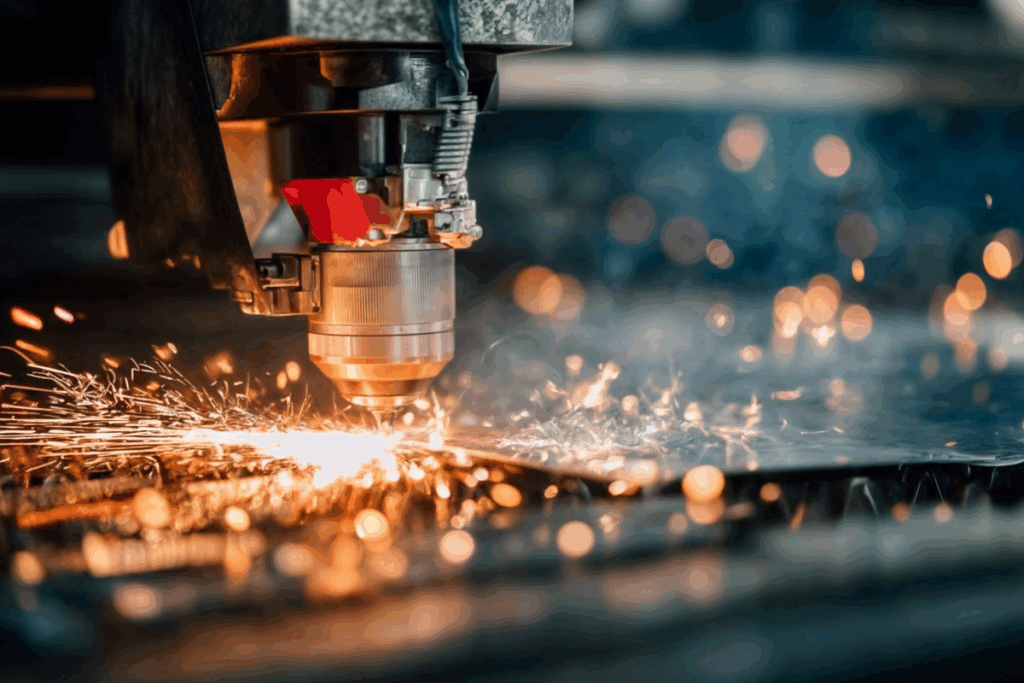
CNC machining uses computerized control systems to operate and manipulate machining tools according to programmed instructions from CAD software, where product drawings are created and stored. These instructions allow cutting tools to make precise movements and perform three-dimensional cuts (X, Y, and Z axes).
Because the tools follow the same instructions every time, the system can be fully automated, eliminating margins of error and ensuring consistently accurate results, even with large, complex projects that require tight tolerances.
CNC technology also enables metalworking suppliers to achieve virtually unlimited scalability without sacrificing quality in large production runs.
What Are The Benefits Of CNC Machining To OEMs?
CNC technology offers manufacturers several significant advantages that cut costs and boost profits, including:
- Enhanced Productivity Through Automation
CNC machining’s automation enables 24/7 production, reducing processing times and increasing output compared to traditional machining methods. This critical feature lowers labour costs and optimizes production scheduling, potentially allowing the manufacturers to bring their products to market sooner.
- Improved Repeatability
CNC technology can produce identical parts with a high degree of consistency, which is essential for mass production. Additionally, its ability to reproduce parts consistently throughout the production run virtually eliminates errors, reducing the risk and associated costs of production downtime, rework, and material waste.
- Increased Design Flexibility
Projects that require complex, high-precision components are well served by CNC technology, which can create intricate parts that would be highly challenging for human fabricators. Minimizing rework and material waste from human error helps protect the OEM’s production budget while enabling design flexibility previously unheard of.
Read More: The Impact Of Tolerances On Fabrication Projects
- Easier, More Responsive Product Redesigns
Manufacturers need to respond dynamically to customer demand, which often requires them to adjust their product designs. Revisions using CAD software allow fabricators to feed updates to the CNC tools, which can immediately implement the new product designs. This significantly reduces R&D time, allowing manufacturers to stay aligned with customer expectations while staying within budget.
- Better Tool Maintenance
One of the most common causes of production disruption is tool maintenance, which costs manufacturers in terms of machine downtime, lost productivity, and costly repairs. CNC machines can be integrated with sensors and real-time tool monitoring systems that detect and report potential tool wear and tear long before there’s a risk of breakdown, reducing the risk of expensive work stoppages due to machine failure.
- Supports Sustainability Initiatives
Sustainability remains at the forefront of consumers’ minds. By reducing waste and using energy more efficiently, CNC technology helps bolster OEMs’ public image as good environmental stewards, potentially increasing sales while cutting costs.
- Faster Time to Market
OEMs are under increased pressure to stay competitive in a tightening marketplace by getting their products to market quickly without sacrificing quality. With CNC technology’s ability to automate processes, there will be little to no production downtime, allowing OEMs to deliver high-quality products to customers faster and gain a profit-boosting competitive edge.
Partner With AC Fabrication & Assembly Solutions: Your Premier Construction, Industrial, And Agriculture Equipment Manufacturing Company
AC Fabrication & Assembly Solutions specializes in advanced technologies, including CNC machining, to help you achieve your production goals. Our engineers collaborate closely with your R&D team to identify optimization opportunities and recommend solutions that deliver unparalleled quality, reliability, and performance.
When you partner with us, you can be assured of quality products created using the latest metalworking innovations and exceptional customer service focused solely on the successful completion of your project, every time.
Read More: About Us
AC Fabrication And Assembly Solutions: Using Advanced Metalworking Techniques To Deliver Better Quality Products
With 300 years of combined experience under our belts, we offer unparalleled quality, durability, and service that you won’t find with any other supplier. These are delivered by skilled technicians whose primary goal is to create sustainable growth for our customers.
Contact an AC Fabrication and Assembly Solutions expert at 204-952-1900 or sales@acfabandassembly.com for a custom quote on your next project today!