At AC Fabrication & Assembly Solutions, we specialize in providing complete metalworking solutions for our global OEM customers in agriculture, mining, construction, and other off-road industrial sectors. Our capabilities run the gamut in machining and fabrication, including metal punching.
Metal punching is a common technique in precision machining, but its role in delivering high-quality results isn’t always fully understood. This month’s blog delves into what metal punching is and the benefits this process delivers to our customers.
What Is Metal Punching?
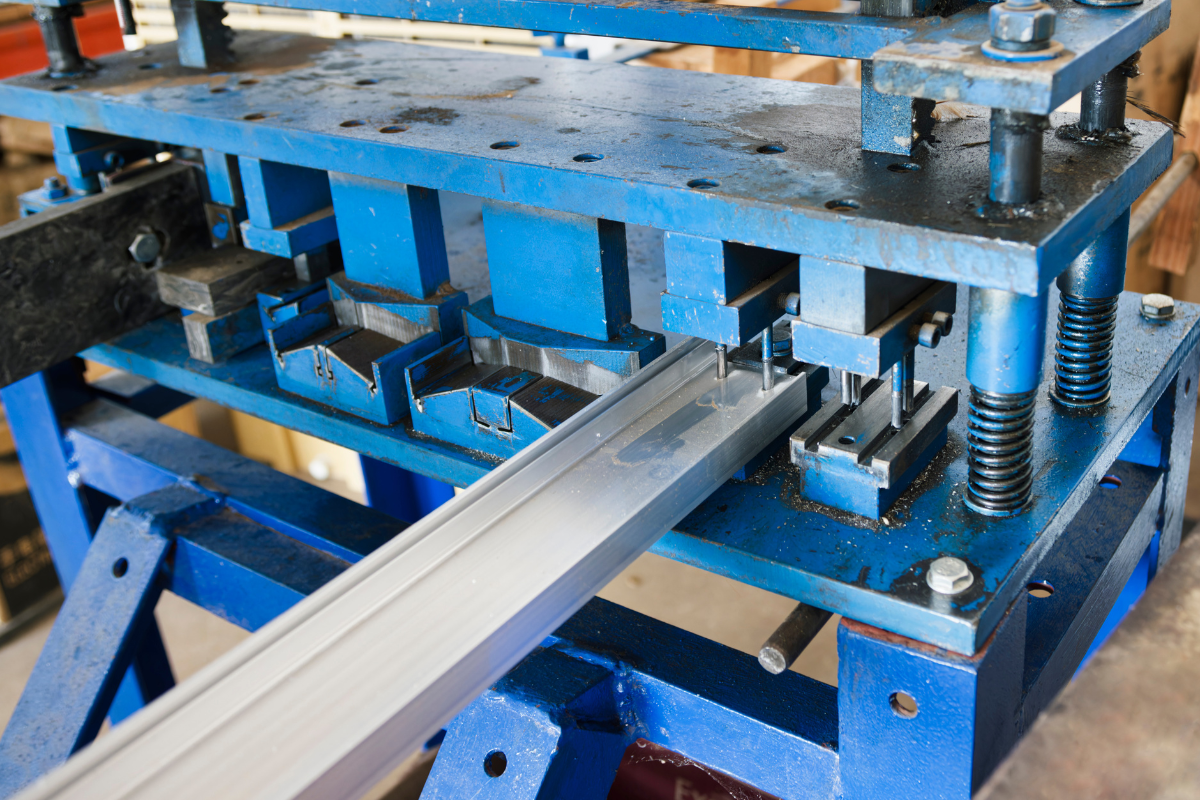
Metal punching is a sheet metal fabrication process that uses a hardened tool, called a punch, and a matching die to create holes, forms, or cut-outs in flat material. However, it’s important to note that its role goes beyond simply punching holes; rather, it transforms raw materials into a functional workpiece before the machining process begins.
The punching process begins by loading flat sheet stock, such as steel, aluminum, or high-strength alloys, into a CNC punch press or turret punch. The machine positions the sheet under a selected tool, then drives the punch into the material with a precisely-controlled stroke.
As the punch penetrates the sheet, three events happen in sequence:
- Elastic Deformation
At the moment of contact, the atomic structure of the material is strained but not permanently altered. If the punch were to retract at this point, the material would return to its original shape because it can absorb and store energy.
From a process standpoint, elastic deformation is brief but important. It determines how the material initially resists the punch and influences how force is distributed across the tool face. Variations in material properties, such as yield strength or thickness, affect how quickly the process moves beyond this stage.
- Plastic Deformation
As the punch force exceeds the material’s yield strength, the process enters plastic deformation, and the shape of the hole or feature is effectively formed. Unlike elastic deformation, this stage does not reverse when the load is removed.
Plastic deformation is responsible for the smooth, burnished portion of the cut edge. This is the part of the process where the punch cleanly shears the material before fracture occurs. The size and quality of this zone depend on several factors, including the punch-to-die clearance, tool sharpness, and the material’s ductility.
- Fracture
Once the material can no longer sustain the applied stress, it enters the fracture stage. Cracks initiate at both the punch and die edges and propagate toward each other until the material separates completely.
In a well-controlled punching process, the fracture is highly predictable and follows the tool’s intended shape. The goal is to ensure that crack propagation is clean and consistent, minimizing tearing or distortion.
The key to effective metal punching is controlling the transition between these stages. The right balance delivers parts that are not only dimensionally accurate but also structurally reliable and ready for downstream processing.
What Are The Benefits Of Metal Punching To OEMs?
The most immediate advantage that metal punching delivers is speed. A single hit takes a fraction of a second, and modern machines can execute hundreds of hits per minute. For high-volume components, this speed helps improve production scheduling. Also, punching provides fast, consistent processing without sacrificing component quality or accuracy, resulting in better part-to-part alignment, fewer assembly issues, and less rework.
Because the process is controlled by CNC technology, it is highly repeatable, delivering the benefit of consistent results across thousands of parts with minimal variation.
Flexibility is another benefit delivered by metal punching. Modern punch presses can switch between part programs quickly, making it easier to adapt to changing production demands without significant retooling or downtime, helping to reduce manufacturing costs.
There’s also a material efficiency benefit to metal punching. Punching produces shapes with minimal scrap compared to full subtractive machining. When working with expensive alloys or high-strength steels, that reduction in waste has a measurable impact on cost.
Of course, the best way to reap these benefits is to partner with a supplier that specializes not just in metal punching but also in how it fits into the entire metalworking process. When you need comprehensive precision machining support to bring your parts and equipment concepts into reality, call our team first.
Read More: Our Solutions
Collaborate With Our Team Of Skilled Technical Professionals For Agricultural, Construction, And Industrial Fabrication
At AC Fabrication and Assembly Solutions, we review every aspect of your project and recommend the best approach to creating high-quality, to-spec parts that streamline assembly and perform reliably and effectively in the field.
With our team on your side, you’re not just assured of the best results possible, but also a metalworking partner truly invested in your success.
AC Fabrication And Assembly Solutions: Using Advanced Metalworking Techniques To Deliver Better Quality Products
With 300 years of combined experience under our belts, we offer unparalleled quality, durability, and service that you won’t find with any other supplier. These are delivered by skilled technicians whose primary goal is to create sustainable growth for our customers.
Contact an AC Fabrication and Assembly Solutions expert at 204-952-1900 or sales@acfabandassembly.com for a custom quote on your next project today!